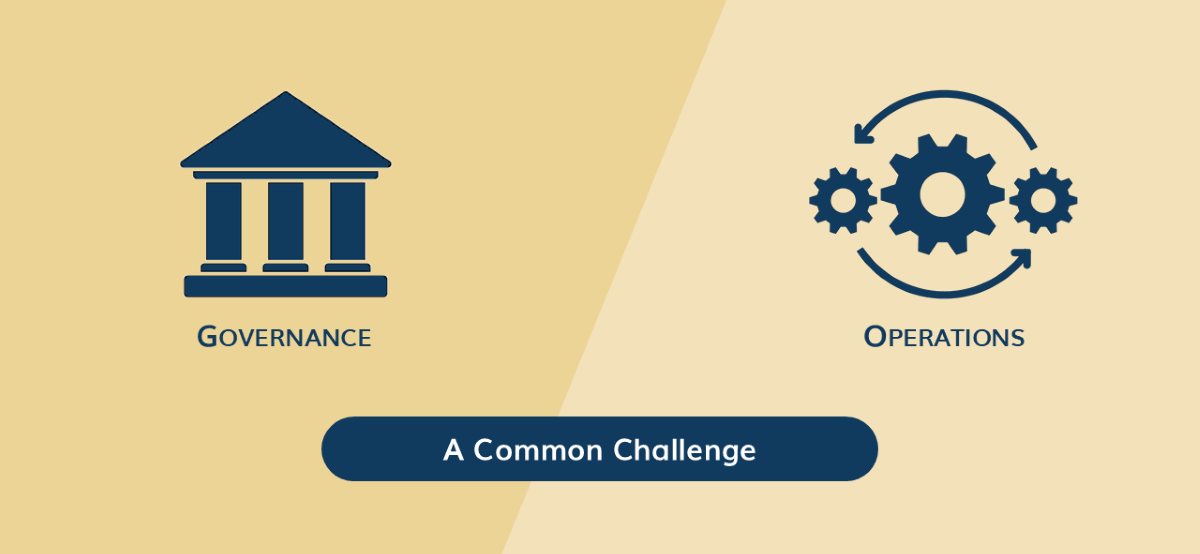
Strong governance is essential to a thriving Catholic school, yet school boards everywhere face the same question: Where does governance end and operations begin?
It’s one of the most consistent challenges we see in our work. Board members bring passion and expertise; school leaders bring mission-driven, day-to-day experience. Without shared clarity, even the best intentions can blur roles and create confusion.
And your school is not alone. Nearly every board Meitler supports navigates this same tension, which makes sense—Catholic boards are filled with people who care deeply, and the line between oversight and management isn’t always obvious.
We facilitated a governance–operations role-play with a Catholic high school board, and the conversation was so productive that it inspired this post.
Key Insights for Administration, the School Board, and Their Respective Roles
This article outlines three key insights:
- Why the blurred lines between governance and operations are so common.
- How boards and school leaders can address it together.
- A simple exercise any board can use to build confidence around their roles.
If your board has ever wondered, “Is this ours to solve?” you’re in good company—and with the right tools, this is a challenge you can absolutely overcome.
Why the Tensions Between the School Board and Administrators Is Common in Catholic Schools
Why This Challenge Is So Common in Catholic Schools
Catholic school board models differ from many independent or charter school governance models:
- Boards are volunteer-based, with members who care deeply about the school and want to help in practical ways.
- Resources are limited, so board members often feel compelled to “jump in” operationally.
- Roles vary widely—from advisory boards, to boards of limited jurisdiction, to boards of specified jurisdiction—each with different canonical and diocesan parameters.
- Relationships matter deeply. Board members often have children, history, or parish ties to the school, making the line between objective governance and personal experience more difficult to hold.
- Mission-driven environments create urgency. When enrollment dips, finances tighten, or culture challenges arise, it can be tempting for everyone to step in everywhere.
This is not failure.
This is normal.
The key is building the capacity and shared discipline to respond well.
How A School Board Can Approach the Governance–Operations Tension
-
Start With Clarity About the Board’s Purpose
Every school board member should have a common understanding of their jurisdiction. In most Catholic schools, the role of the board and its primary responsibilities include:
- Mission fidelity
- Strategic direction
- Financial oversight
- Policy development
- Advancement and resource stewardship
- Hiring, supporting, and evaluating the school leader
This clarity alone resolves a significant percentage of role-confusion issues. While governance models can vary, the three driving priorities for a Catholic school board remain unchanged.
-
Embrace the “Nose In, Fingers Out” Principle
School boards should seek information broadly—finance, academics, enrollment, facilities—but remain disciplined about not micromanaging the day-to-day decisions, processes, or personnel involved.
Curiosity is healthy. ("Nose in.")
Intervention is not. ("Fingers out.")
-
School Administrators Should Proactively Communicate
Principals and presidents play a major role in keeping governance healthy.
School administrators should:
- Provide the board with high-level information
- Explain the rationale behind decisions
- Offer options when board input is needed
- Clarify which matters are operational and therefore off the board’s plate
A principal empowered to lead—and a board confident in that leadership—is the strongest combination.
-
Revisit Roles Regularly
Especially in seasons of stress (budget season, leadership transition, enrollment challenges), boards should revisit:
- Committee charters
- Board bylaws
- Lines of authority
Role clarity is not a one-time achievement—it’s a discipline that must be tended.
While Navigating These Roles Can Be Difficult, Your School Board Isn’t Alone
Catholic school boards rarely struggle because of a lack of commitment—they struggle because governance requires a clarity of role that mission-driven teams don’t always pause to articulate.
One of the most effective tools we’ve used with boards is a sorting exercise that distinguishes governance from operations in a concrete, practical way. The insights it produces are meaningful.
We’ve prepared a downloadable practical role play exercise for school boards ready to begin this conversation.
And if your board is looking to build a more disciplined, future-focused governance practice, we’d welcome a deeper conversation about how Meitler can support that work. Contact us for board training tailored to your school, your board, and your priorities.
- Megan Famular