
Why Your School Needs a Comprehensive Portrait of a Graduate
A portrait of a graduate is a school district’s vision for the character of its students. Its definition must never be limited to solely academic achievements and goals.
It must prioritize and describe the moral framework, convictions, and personal values that define the student upon graduation.
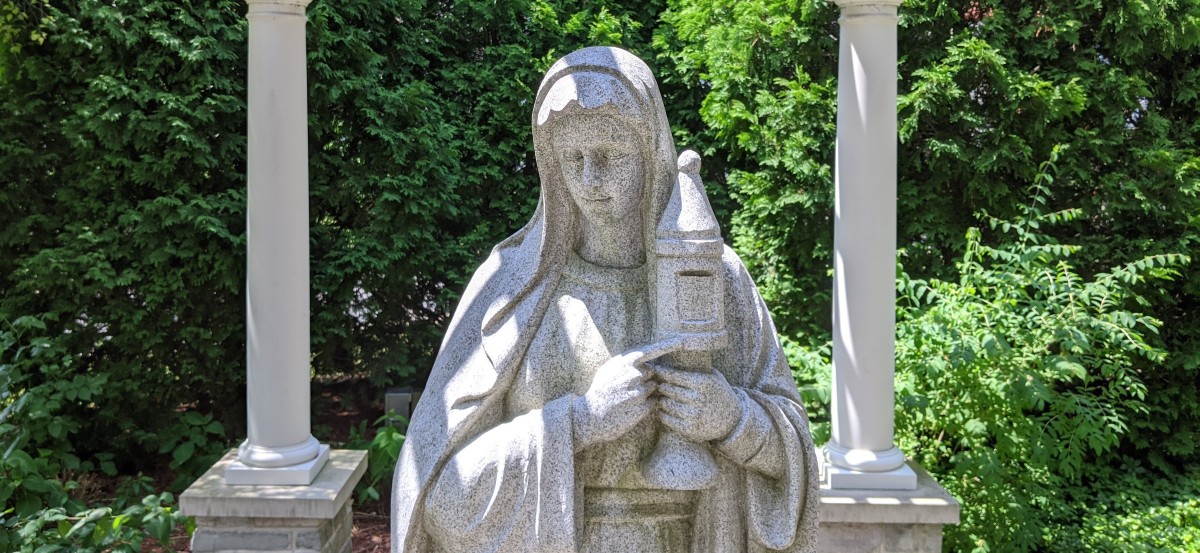
On the feast day of St. Clare of Assisi, I often think of her quote: “We become what we love, and who we love shapes who we become.”
I remember one August (many years ago) when I spent several days preparing my classroom for the start of school. I had just been hired for my first teaching job, teaching middle school students in a Catholic parish school in a suburb of Milwaukee, WI.
I was hanging up some motivational posters in the classroom (probably purchased through a catalog I found in the teacher’s lounge of the school where I did my student teaching).
One poster said, “Who you are becoming is more important than what you are achieving.” While not exactly the school’s mission, I chose to put it at the front of the classroom. I certainly wanted student outcomes to include hard work, good grades, and achievements, but even at the beginning of my teaching career, I had a sense that there was truth to that poster.
At the heart of a graduate’s portrait is “who you are becoming.”
Learning from St. Clare
A number of years later I started working at a university sponsored by Franciscan sisters, in a lay ministry formation center called the Saint Clare Center.
As I began to learn more about St. Francis and St. Clare of Assisi, I realized that they would have agreed with the poster at the front of my first classroom. Rather than seeking upward mobility, they chose a life of downward mobility, embracing poverty and service because they wanted to become more like Jesus.
For Clare, a key to becoming more like Jesus was prayer. In one of her letters, she encouraged the reader to “Gaze upon Christ, consider Christ, contemplate Christ, so as to imitate Christ.”
Clare sought to become a vessel of God’s compassionate love for others, and prayer was part of her method to promote that transformation – as was her practice of washing the feet of the other sisters in the convent, or her habit of walking through the dormitory at night to make sure each sister was well covered by a blanket.
Defining the Ideal Portrait of a Graduate through a Catholic Lens
If St. Clare came to a graduation ceremony at one of our Catholic schools, I think she would be uninterested in graduate portraits touting our students’ GPAs, and unimpressed by the dollar amounts of the scholarships they had won.
I think she would be much more interested in whether the students reflected the goals we establish when we write a Portrait of a Graduate or a Grad at Grad document.
In those documents, we do say that we want students who have become:
- Lifelong learners
- Critical thinkers
- Academically strong
But we also say that because of time spent in Catholic schools, we want students who have become:
- Faith-filled learners who seek the truth
- Generous and compassionate in their service to others
- The people God calls us to be, like St. Clare
A Portrait of a Graduate Shows Really Important to the Graduate and the School
This raises one question for me regarding the portrait of a graduate and our strategic planning.
This raises one question for me, on this feast day of St. Clare. Our schools are intentional and systematic about how all the parts of the school work together to produce academically strong students.
Are we as intentional and systematic about how all the parts of the school work together to help students become more faith-filled, generous, and compassionate – or do we leave that task to the campus minister and the theology teacher?
Is there room for us to do better at identifying methods of transformation, simple steps that everyone in the school can take to help our students (and ourselves) become more like Christ?
Does your school’s portrait of a graduate reflect the ‘downward mobility’ and compassion of St. Clare? Start a conversation with Meitler on how we can make mission and outcomes more intentional.
Michael Taylor